



I Events
For decades, manual fabric inspection has been the standard approach for textile quality control. Many mills still rely heavily on experienced inspectors to identify defects, grade fabrics, and maintain production quality.
But today, the economics of textile manufacturing are changing rapidly.
Rising wages, labor shortages, inconsistent inspection results, and increasing customer expectations are putting enormous pressure on textile factories. What once seemed like a manageable operating expense is now becoming a major threat to profitability.
As a result, more manufacturers are comparing manual vs. AI fabric inspection costs and realizing that labor-intensive quality control may be quietly reducing their margins year after year.
The Real Cost of Manual Fabric Inspection
When mills calculate inspection expenses, they often focus only on salaries. However, the actual cost of manual inspection is much higher.
Manual fabric inspection creates ongoing operational costs such as:
Inspector wages
Overtime expenses
Recruitment costs
Employee turnover
Training and supervision
Quality inconsistency
Production slowdowns
Missed defects and customer claims
In high-volume textile production, these costs accumulate quickly.
For factories running multiple shifts, maintaining large inspection teams becomes increasingly expensive — especially as labor markets tighten and wage expectations continue to rise.
Labor Fatigue Reduces Inspection Accuracy
Unlike machines, human inspectors cannot maintain the same concentration level throughout long production hours.
Fatigue often leads to:
Missed defects
Inconsistent grading standards
Lower inspection speed
Reduced efficiency during night shifts
Variation between operators
Even highly experienced inspectors can struggle to maintain stable accuracy under continuous workload pressure.
For textile mills producing large fabric volumes daily, small inspection errors can create significant financial losses over time.
Why AI Fabric Inspection Changes the Cost Structure
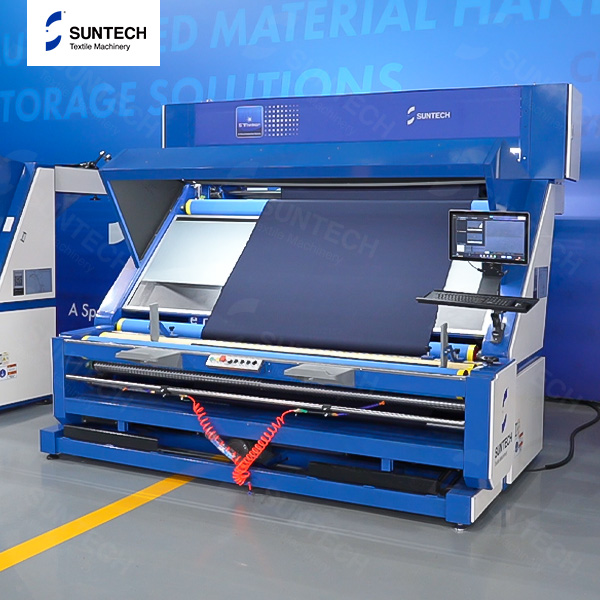
AI fabric inspection systems operate very differently from traditional manual inspection processes.
Instead of relying on human observation alone, automated systems use:
High-resolution industrial cameras
AI defect recognition algorithms
Real-time image processing
Automated quality reporting systems
This allows textile mills to move from labor-dependent inspection to technology-driven quality control.
More importantly, AI changes inspection from a variable operational cost into a scalable production investment.
Reducing Dependency on Large Inspection Teams
One of the biggest financial advantages of AI inspection systems is labor reduction.
In traditional inspection environments, factories often require multiple inspectors across several production lines and work shifts.
AI-powered systems can significantly reduce manpower requirements by:
Automating continuous fabric inspection
Reducing repetitive manual tasks
Allowing fewer operators to manage larger volumes
Lowering long-term hiring needs
For many mills, a single AI inspection machine can replace several manual inspection stations while maintaining more stable performance.
This creates major savings over time, particularly in regions where labor costs are increasing every year.
The Hidden Profit Loss from Defect Leakage
Manual inspection not only increases labor expenses — it also creates hidden profit losses through inconsistent defect detection.
When defects are missed during inspection, factories may face:
Customer complaints
Returned shipments
Reprocessing costs
Fabric waste
Production delays
Brand reputation damage
These losses are often much more expensive than the inspection process itself.
AI fabric inspection systems help reduce defect leakage by maintaining consistent inspection accuracy throughout production.
With real-time defect detection, mills can identify problems earlier and avoid larger downstream losses.
Efficiency Directly Impacts Profitability
In textile manufacturing, efficiency and profitability are closely connected.
Manual inspection can become a bottleneck when production speed increases. Human inspectors have physical limitations that restrict how fast fabric can be inspected accurately.
AI systems improve production flow by enabling:
Continuous high-speed inspection
Stable inspection performance
Faster fabric throughput
Reduced downtime
Better production coordination
As efficiency improves, factories can process more fabric without proportionally increasing labor costs. This directly improves operational margins.
Why More Mills Are Transitioning to AI Inspection
Global textile competition is becoming increasingly intense. Buyers now expect:
Higher quality consistency
Faster delivery
Greater production transparency
Lower defect rates
Factories that continue relying only on manual inspection may struggle to maintain competitiveness under rising labor costs and operational pressure.
AI-driven fabric inspection helps mills modernize quality control while improving both efficiency and profitability.
For many manufacturers, the question is no longer whether automation is necessary — but how quickly they can implement it.
Conclusion
The debate between manual vs. AI fabric inspection cost is no longer simply about equipment investment. It is about long-term profitability, operational efficiency, and sustainable factory growth.
While manual inspection may appear cheaper initially, rising labor costs, inconsistent quality, and hidden production losses can significantly reduce profits over time.
AI fabric inspection systems help textile mills reduce labor dependency, improve defect detection, increase efficiency, and build a more scalable quality control process.
As the textile industry continues moving toward intelligent manufacturing, automated inspection is becoming a critical investment for factories that want to remain competitive and profitable in the years ahead.