



I Events
The textile industry is entering a new era of intelligent manufacturing. As global competition intensifies and customer expectations continue to rise, textile mills are under increasing pressure to deliver higher quality fabrics faster and more efficiently.
Traditional manual inspection methods are no longer enough to meet the demands of modern textile production. This is why more manufacturers are turning to AI-driven inspection systems and automated textile quality control technologies to improve operational efficiency and reduce production risks.
By combining artificial intelligence, machine vision, and automation, textile mills can now achieve faster, smarter, and more consistent quality inspection than ever before.
The Growing Need for Automated Textile Quality Control
Textile manufacturers face several ongoing challenges in quality management:
- Increasing labor costs
- Shortage of skilled inspectors
- High production volumes
- Tight delivery schedules
- Rising customer quality expectations
- Pressure to reduce waste and operational costs
Manual inspection often struggles to maintain stable performance under these conditions. Human inspectors can experience fatigue, inconsistent judgment, and missed defects during long working hours.
AI-driven inspection systems solve these challenges by providing continuous, standardized, and high-speed quality control throughout the production process.
How AI Improves Inspection Efficiency
Efficiency is one of the biggest advantages of AI-powered textile quality control systems.
Faster Inspection Speeds
Manual inspectors are limited by human visual processing speed and physical fatigue. AI inspection systems can operate continuously at high speeds without interruptions.
This allows mills to:
- Inspect larger fabric volumes
- Reduce production bottlenecks
- Improve workflow efficiency
- Increase daily output capacity
Automated inspection helps factories maintain productivity even during peak production periods.
Real-Time Defect Detection
AI-driven inspection systems identify defects immediately during production rather than after fabric processing is complete.
Real-time detection enables factories to:
- Correct production issues faster
- Reduce defective fabric output
- Minimize material waste
- Lower rework costs
Early defect identification is especially important for high-value textiles and export-quality fabrics.
Consistent Inspection Standards
Human inspection results can vary depending on operator experience, fatigue, and concentration levels.
AI systems apply the same inspection standards across every production shift and inspection cycle. This improves consistency and ensures more reliable quality control.
For textile manufacturers working with international buyers, consistent quality standards are critical for maintaining long-term business relationships.
Reducing Labor Dependency in Textile Mills
Labor shortages are becoming a serious challenge in many textile manufacturing regions. Recruiting and training skilled inspectors requires significant time and cost.
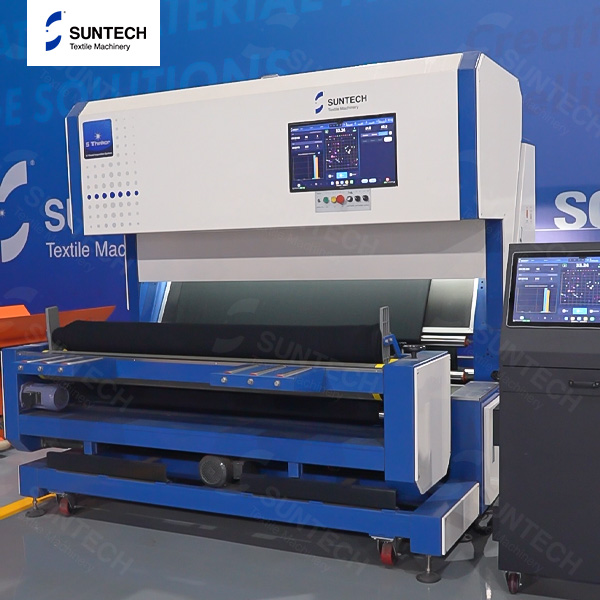
Automated textile quality control systems help mills reduce dependency on manual labor by allowing fewer operators to supervise larger inspection processes.
Benefits include:
- Reduced labor costs
- Lower training expenses
- Improved workforce allocation
- Reduced human error
- More stable operational performance
In many factories, AI inspection systems can significantly improve efficiency while lowering long-term operating costs.
Supporting Smart Textile Manufacturing
AI-driven inspection is also an important part of smart factory transformation in the textile industry.
Modern inspection systems can integrate with:
- ERP systems
- MES platforms
- Production management software
- Automated warehouse systems
- Data analytics platforms
This creates a connected manufacturing environment where production and quality data can be monitored in real time.
Factories can use inspection data to optimize production processes, identify recurring issues, and improve overall operational efficiency.
Improving Customer Satisfaction
Consistent product quality directly impacts customer trust and brand reputation.
AI-driven inspection systems help textile mills deliver more reliable fabric quality by reducing defect leakage and improving inspection accuracy.
This leads to:
- Fewer customer complaints
- Lower return rates
- Better delivery reliability
- Stronger customer confidence
- Increased competitiveness in global markets
For mills supplying premium fabrics, technical textiles, automotive textiles, or apparel brands, advanced quality control technology can become a major competitive advantage.
The Future of AI in Textile Inspection
Artificial intelligence continues to evolve rapidly, and its role in textile manufacturing will only grow stronger.
Future AI textile inspection systems are expected to offer:
- Higher detection precision
- Faster data processing
- Predictive quality analytics
- Automated defect classification
- Smarter production optimization
- Greater integration with Industry 4.0 systems
As more textile manufacturers adopt automation, AI-driven inspection will become a standard component of modern textile production.
Conclusion
AI-driven inspection is transforming textile quality control by helping mills maximize efficiency, improve consistency, and reduce operational costs.
Automated textile quality control systems provide faster inspection speeds, real-time defect detection, and more reliable quality management compared to traditional manual inspection methods.
For textile manufacturers looking to stay competitive in an increasingly demanding market, investing in AI-powered inspection technology is becoming an essential step toward smarter and more efficient production.