



Choosing an automatic fabric inspection machine is not simply about comparing machine speed or price. A system that performs well during a supplier demonstration may produce different results in your factory because fabric type, width, speed, lighting, tension and defect characteristics all affect inspection performance.
Before comparing quotations, focus on seven areas: resolution, colour detection, defect types, AI model training, fabric handling, data integration and after-sales service.
 Seven checks before you compare quotations
1. Check inspection speed together with resolution
Inspection speed is one of the easiest specifications to compare, but it does not tell you how accurately the machine can detect small defects.
Camera resolution depends on fabric width. For example, a 4,096-pixel camera provides approximately 0.44 mm/pixel across a 1,800 mm fabric width, but about 0.98 mm/pixel across 4,000 mm.The same camera therefore does not necessarily provide the same detection capability across different fabric widths.
Speed also affects image capture. At 80 m/min, the fabric moves at approximately 1,333 mm per second, leaving less time for image exposure and processing. Lighting, camera exposure and processing speed must therefore be suitable for the actual production speed.
When evaluating a machine, ask for:
- Resolution in mm/pixel
- Camera type and resolution
- Exposure time at your required speed
- Lighting configuration
- Minimum detectable defect size
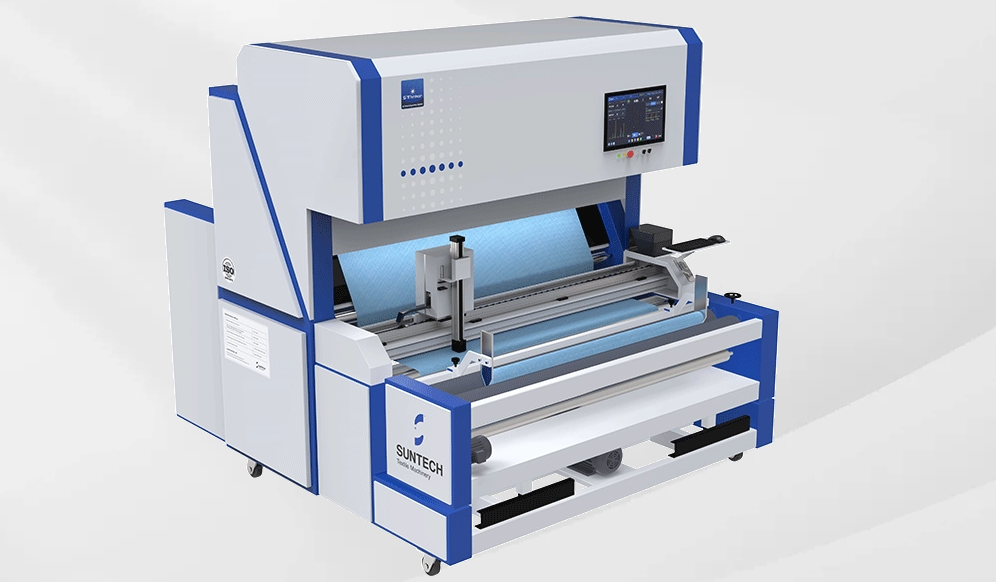
Our ST-Thinkor automatic fabric inspection machine is specified across this range: fabric widths from 1,800 to 4,000 mm at speeds up to 80 m/min, with the camera configuration matched to the width.
The important point is to compare these figures under similar fabric and operating conditions.
2. Evaluate detection by defect type
A high overall detection rate does not necessarily mean that every defect category is detected equally well.
AI fabric inspection systems are usually trained using image samples from particular fabrics and production environments. Your factory may have a different defect distribution.
Start with your own inspection records and identify the defects that matter most, such as:
- Weft bars
- Holes
- Oil marks
- Shade bands
- Missing yarns
- Other customer-critical defects
Then ask the supplier to demonstrate detection performance for each important defect class.
Also define the defect categories before testing. Your QA team and the supplier should agree on what counts as a defect so that the test results can be compared fairly.
3.Look beyond the hardware
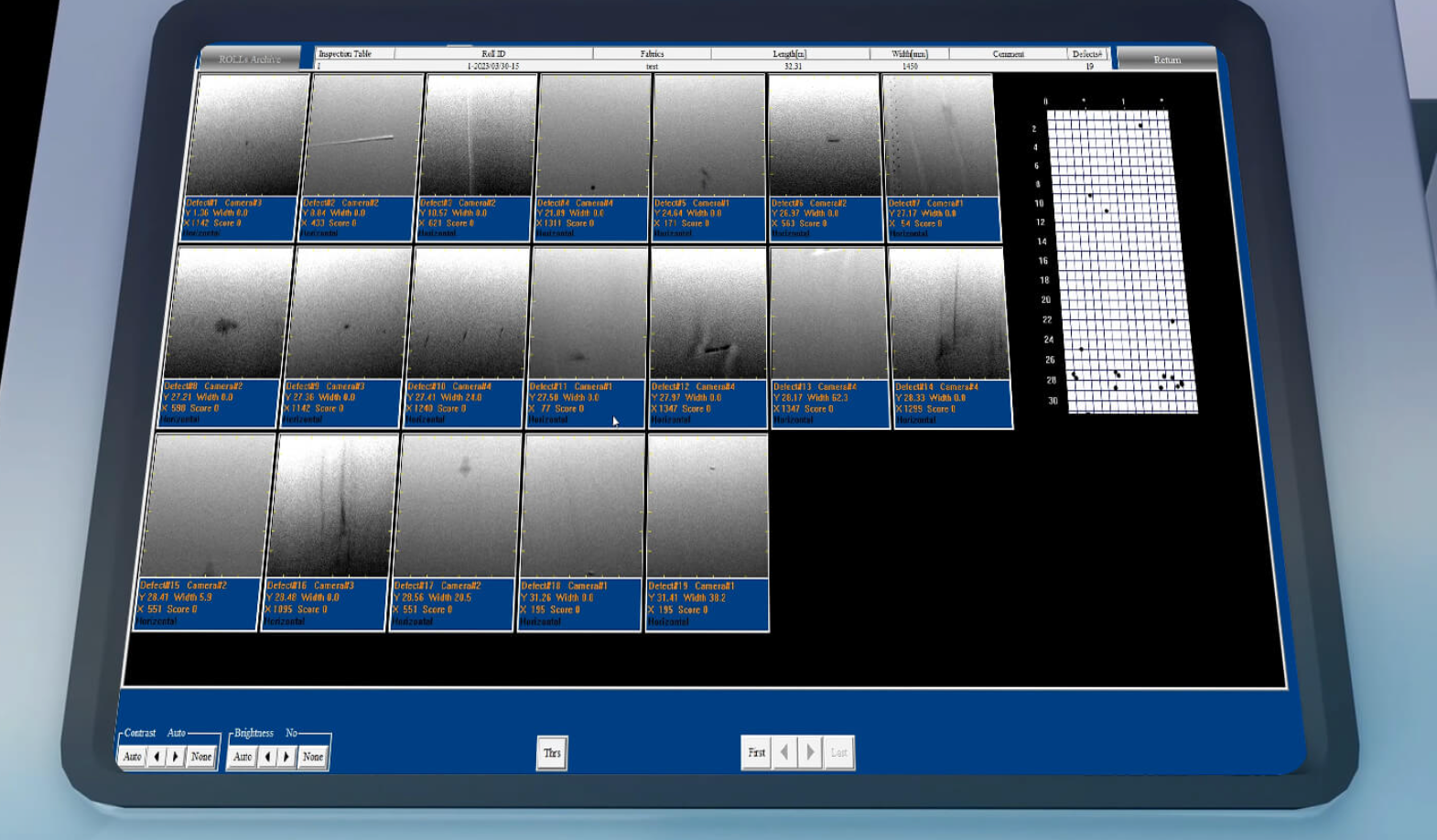
An automatic fabric inspection system includes more than cameras. It typically combines cameras, lighting, computing hardware, software and trained inspection models.
The hardware is easy to compare. The model and software are more difficult to evaluate, but they can have a major impact on long-term performance.
Ask the supplier:
- How is the AI model trained?
- How many labelled samples are required?
- Who labels the images?
- Can new fabric styles be added?
- What is the cost and turnaround time for model updates?
This becomes especially important if your factory regularly introduces new fabrics.
A machine should not only work well on today's production. It should also be practical to update when your product range changes.
4. Check fabric tension and alignment
Camera performance depends partly on how consistently the fabric reaches the inspection area.
Stretch fabrics can behave differently from stable woven fabrics under the same operating conditions. Changes in tension can affect the position and appearance of defects in the captured image.
Edge alignment is also important. Curled or uneven selvedges can reduce the usable inspection width and affect image consistency.
For an in-line inspection system connected to a loom, synchronization and alignment become even more important.
Our ST Thinkor-L in-line fabric inspection system holds edge alignment within 5 mm.
Ask suppliers for measurable specifications such as:
- Operating tension range
- Edge alignment tolerance
- Fabric synchronization method
- Compatibility with your loom or production line
5. Check where inspection data goes
An automatic fabric inspection machine can generate defect locations, defect categories, roll grades and other production information.
The value of this data increases when it can be connected to the next production process.
Before purchasing, ask whether the system can:
- Export inspection results
- Connect with ERP or MES
- Link results to individual rolls
- Export defect maps
- Transfer quality information automatically
Do not rely only on a supplier's statement that “ERP integration is supported”. Test the actual data flow with your existing system before final acceptance.
If inspection data also needs to move into downstream processes such as packing, an integrated inspection and packing workflow can reduce repeated data entry and improve traceability.
6. Define after-sales service in measurable terms
A warranty period does not tell you how quickly a supplier will respond when the machine stops working.
Before signing a contract, clarify:
- Technical response time
- Spare-part lead time
- On-site service conditions
- Camera calibration procedures
- Lighting maintenance
- Software update policy
- AI model retraining costs
For critical components, ask how quickly replacements can be supplied and which maintenance tasks your own technicians can perform.
Important service commitments should be included in the contract rather than left as general warranty statements.
How to Test an Automatic Fabric Inspection Machine
A factory trial is one of the best ways to evaluate whether a machine is suitable for your production.
Use your own fabric, actual production speed and real defect samples.
The trial should include:
- Your most common defect types
- Your most difficult fabric
- Your widest fabric
- Stretch or elastic fabrics, if applicable
- Different colours, if colour inspection is required
If you currently use manual inspection, compare the two processes and record:
- Defects detected by both methods
- Defects detected only by the machine
- Defects detected only by the inspector
- False alarms
- Final QA decisions
Most importantly, define the acceptance criteria before the trial begins.
Specify the fabric range, speed, defect categories, minimum defect size, expected detection performance and acceptable false-alarm level.
This turns a supplier demonstration into a meaningful equipment test.
What Detection Rate Should You Expect?
There is no single detection-rate figure that applies to every fabric inspection application.
Performance depends on fabric type, defect type, defect size, lighting, camera resolution, production speed, fabric tension and AI model training.
For this reason, always ask:
What detection rate can you demonstrate for our fabrics and our main defect categories at our actual production speed?
Our ST-Thinkor frame is specified at up to 80 m/min, with a minimum detectable defect size of 0.1 mm and a detection rate of 90% or above for trained defect classes.
The ST-Thinkor-L in-line model is specified with a minimum detectable defect size of 0.15 mm, detection rate of 90% or above and edge alignment within 5 mm.
These figures should always be evaluated together with the relevant fabric and testing conditions. Every machine in our range of automatic camera inspection systems carries the same caveat.
Final Checklist
Before choosing an automatic fabric inspection machine, make sure you know:
- Your fabric types and widths
- Your normal and maximum production speed
- Your most important defect categories
- The minimum defect size you need to detect
- Required camera resolution
- Colour inspection requirements
- AI model update process
- Tension and alignment requirements
- ERP/MES integration requirements
- Technical response and spare-part lead times
The right machine is not necessarily the one with the highest speed or the lowest price.
It is the system that can provide reliable inspection results on your fabrics, at your production speed, for the defects that matter to your customers.
If you are evaluating an automatic fabric inspection machine ,provide your fabric type,width, production speed and main defect types to the supplier. The supplier should then be able to recommend a suitable configuration, explain the expected inspection performance and define the conditions for a proper factory test.